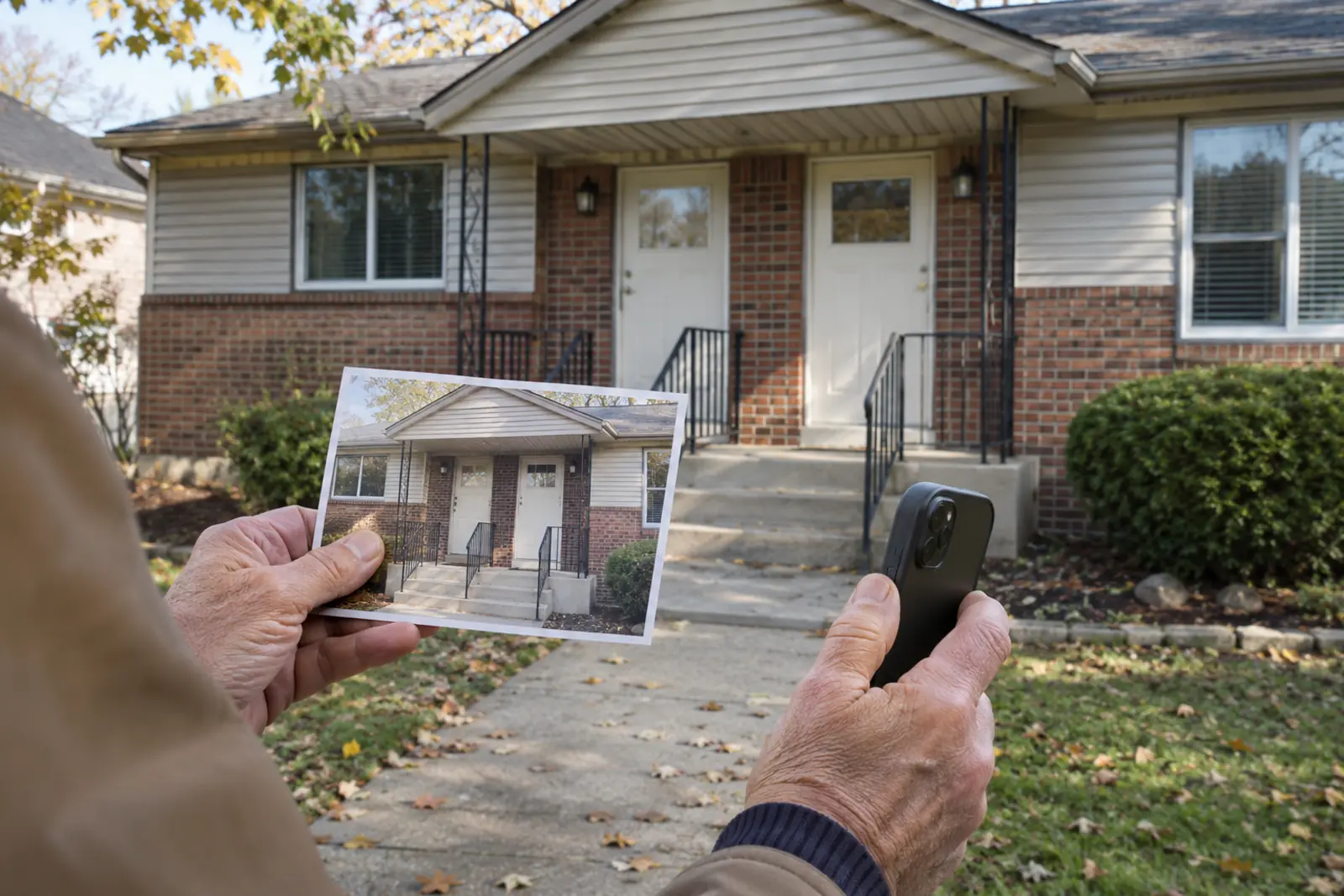
To avoid rental scams when looking for senior housing, verify who controls the housing or assistance program before sending money or personal records. Use an agency’s independently located official website, check the listing against the provider’s own information, and step away from pressure to act quickly. A promise of affordable rent, voucher approval or a waiting-list place is a reason to check the details, not proof that an offer is real.
Recognize the warning signs
Scammers can copy housing descriptions, invent agency names and make an ordinary advertisement look official. An offer may reach an older adult through a search result, social media, a message or someone offering help with paperwork. Familiar housing terms do not establish that the person represents a legitimate program.
The Federal Trade Commission identifies unusually low rent, pressure to decide quickly, an unavailable owner and certain payment demands as rental scam warning signs. Consider the whole exchange. A friendly conversation or a document with an official-looking heading does not resolve concerns about who receives the money.
| Red flag | Why it matters | What to do instead |
|---|---|---|
| Rent far below typical rents | An unusually attractive price can draw attention to a false listing. | Compare other listings and check the provider’s own website. |
| The owner is abroad or cannot show the rental | The advertiser may not control the housing. | Verify the advertiser’s identity and authority before paying. |
| Pressure to pay immediately | Urgency discourages independent checks. | Pause and confirm the offer through a separate, trusted source. |
| Gift card, wire transfer or cryptocurrency payment | The FTC identifies these payment requests as scam warnings. | Stop the transaction and verify the request independently. |
| Early requests for identity or income documents | A false listing can be used to collect sensitive information. | Confirm the recipient and application process before sharing records. |
Scams involving vouchers and waiting lists
Be cautious when someone claims to sell a place on a subsidized housing waiting list, guarantee selection or obtain a voucher in exchange for a “processing fee.” A stranger’s promise does not establish eligibility or agency approval. The housing agency decides under its program rules.
Waiting lists open and close, and agencies must confirm their current procedures. Read about how housing waiting lists work before responding to an offer of special access. Ask the real agency to explain any claimed payment, preference or shortcut.
Find the agency independently
Real agencies publish their own contact information. Look for the official government website address and use HUD’s housing agency list to locate the agency. For Michigan voucher questions, verify with MSHDA or the local housing agency responsible for the program.
Never use contact details sent by the person who reached out to verify that person’s claim. A link, message signature or attached form can send you back to the same source. Locate the agency separately and ask whether it recognizes the offer, website and payment instructions.
Check application instructions and fees
A request labeled “application processing” still needs checking. Ask the verified provider what the payment covers, whether it belongs to that application process and how payment is handled. Do not send money because someone says it will protect a waiting-list place. This guide’s explanation of the affordable senior housing application process can help you prepare questions.
Check rental listings beyond the advertisement
Search the advertised address together with the owner’s name. The FTC flags an address appearing under different owners, or appearing for sale while someone advertises it for rent. Check the rental provider’s own website and compare the details. Conflicting information deserves an explanation from an independently verified source.
An owner who says they are out of the country or cannot show the rental may offer a convincing explanation. Do not let that explanation replace verification. Keep questions about who controls the rental separate from the advertiser’s story about why payment is urgent.
Affordable housing can have different rent rules from an ordinary rental. Even so, a low advertised price does not prove that a subsidy exists. Ask the verified provider which program applies and how its application process works before sending records or money.
Be careful with “senior housing locator” websites
A website describing itself as a senior housing locator may collect personal information rather than accept an application for housing. Before completing a questionnaire, identify who operates the site, what service it provides and who will receive the information. A search result is not evidence of government affiliation.
Do not assume that entering details on a referral website puts someone on an agency’s waiting list. Verify that directly with the agency. If the site’s role is unclear, stop before providing sensitive records. The Area Agency on Aging resource guide explains another source of help finding services and referrals for older adults.
Protect identity and income information
The FTC warns about early requests for a Social Security number, a driver’s license photo or pay stubs before an agreement to rent. Legitimate housing applications may involve eligibility records, so timing alone does not settle the question. Verify the recipient, the purpose and the submission method before sharing anything sensitive.
- Ask which records the verified agency or provider needs and why.
- Use submission instructions obtained directly from that verified source.
- Keep copies of application instructions and records of what was submitted.
- Avoid sending documents through links supplied by an unverified advertiser.
If money has already been sent
Stop contact with the suspected scammer. Contact your bank or card issuer at once through the number printed on your card. Explain what happened and ask what action may be available for the payment. Do not rely on the person who received the money to arrange its return.
Save the advertisement, messages, payment receipts, website address and any documents exchanged. Report the incident to the Federal Trade Commission, the Michigan Attorney General, local police and the website where the advertisement appeared. Find the Attorney General’s reporting instructions through its official Michigan government website. Reporting does not guarantee recovery, but preserves information about the incident.
What to check
Family members helping an older relative can work through these checks together. Explain each step and keep the applicant involved in decisions about documents and payments.
- Source: Locate the agency or provider independently, using official information.
- Offer: Confirm that the advertised housing or assistance process is recognized.
- Waiting list: Verify current instructions with the responsible agency.
- Payment: Question unexplained fees and stop gift card, wire transfer or cryptocurrency requests.
- Documents: Confirm who needs the records and how to submit them.
- Records: Keep messages, instructions and receipts together for later reference.
Frequently Asked Questions
Can someone sell me a place on a housing waiting list?
Treat an offer to sell a waiting-list place as a warning sign. The housing agency controls its application and selection process. Verify any claim directly with the agency using independently located contact information, and do not pay a stranger for promised priority or approval.
How do I check whether a housing agency website is real?
Look for the official government website address and locate the agency through HUD’s agency list. Use contact information published by that verified source. Do not use a link or contact details supplied by the person whose offer you are checking.
Should I send my Social Security number to a rental advertiser?
Verify the advertiser and application process before sending sensitive information. The FTC identifies early requests for a Social Security number, identity photo or pay stubs as warning signs. Ask the verified housing provider which records are needed and how they should be submitted.
What should I do if I paid a rental scammer?
Stop contact and contact your bank or card issuer immediately using the number on your card. Save messages and payment records. Report the incident to the FTC, the Michigan Attorney General, local police and the website where the advertisement appeared. Recovery is not guaranteed.
Does a senior housing locator form put me on a waiting list?
Do not assume that it does. A locator website may provide referrals or collect personal information rather than process housing applications. Ask the responsible housing agency directly whether the submission is part of its application process and what steps remain.